A Game Changer for Safe Digging: The T-VAC 2 Vacuum Excavator at LPL
A Game Changer for Safe Digging: The T-VAC 2 Vacuum Excavator at LPL
When excavating around live aviation hubs, hospitals, or congested service corridors, there is no margin for error. A single service strike is not just an expensive delay: it is a critical safety hazard.
To help combat this, LPL Construction Services added a T-VAC 2 vacuum excavator to its fleet in early 2024, and it has earned its place on site ever since. With more than 900 hours on the machine, it has taken around 1,750 tonnes of arisings out of hand digging, which means a significant reduction in manual handling for our operatives.
It has also made our sites safer, protecting operatives from the effects of service strikes, notably high voltage power services and water, where a strike can flood a trench and lead to its collapse. It is a compact piece of kit, but it has changed how we dig around buried services.
What is a T-VAC 2?
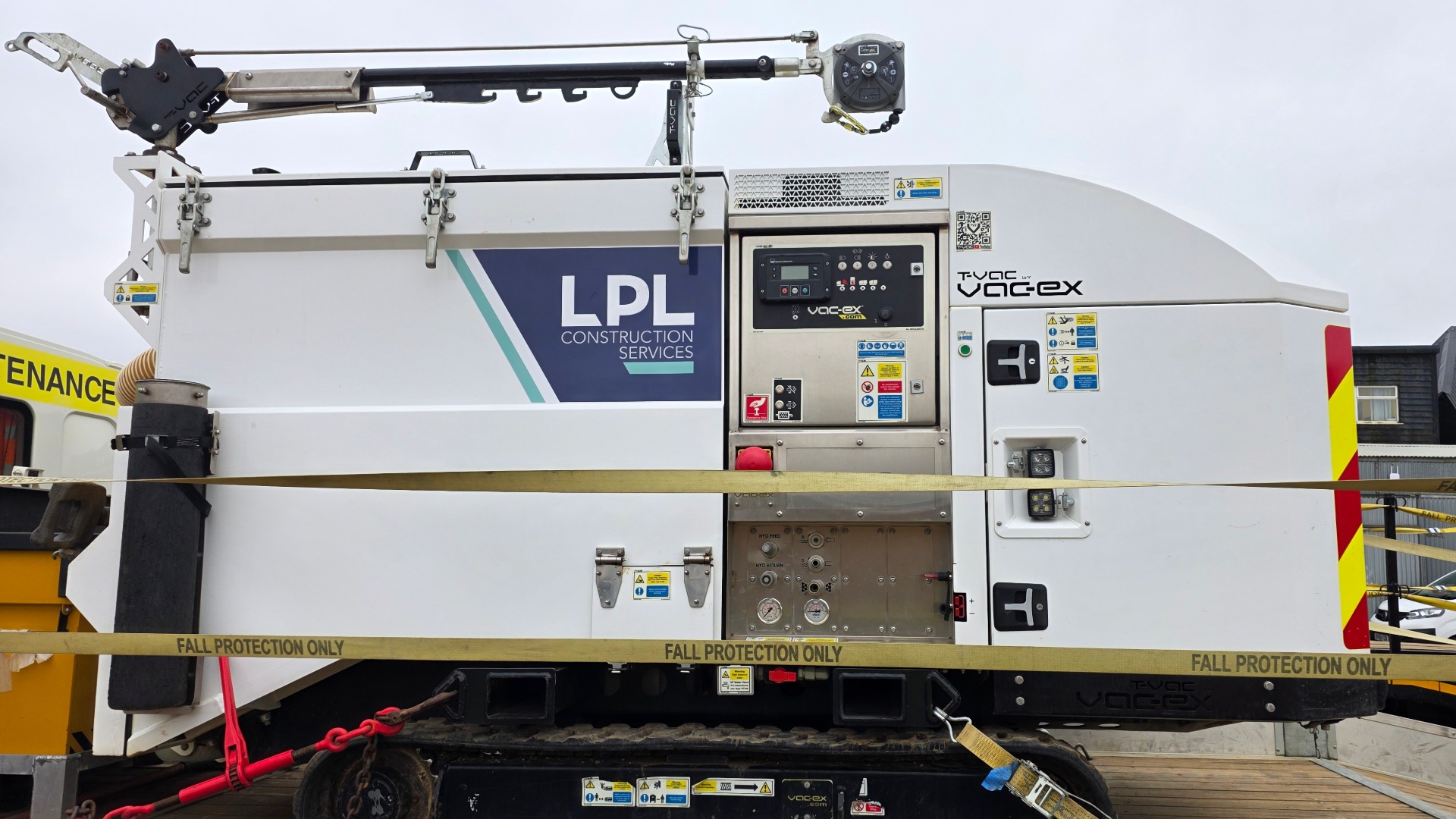
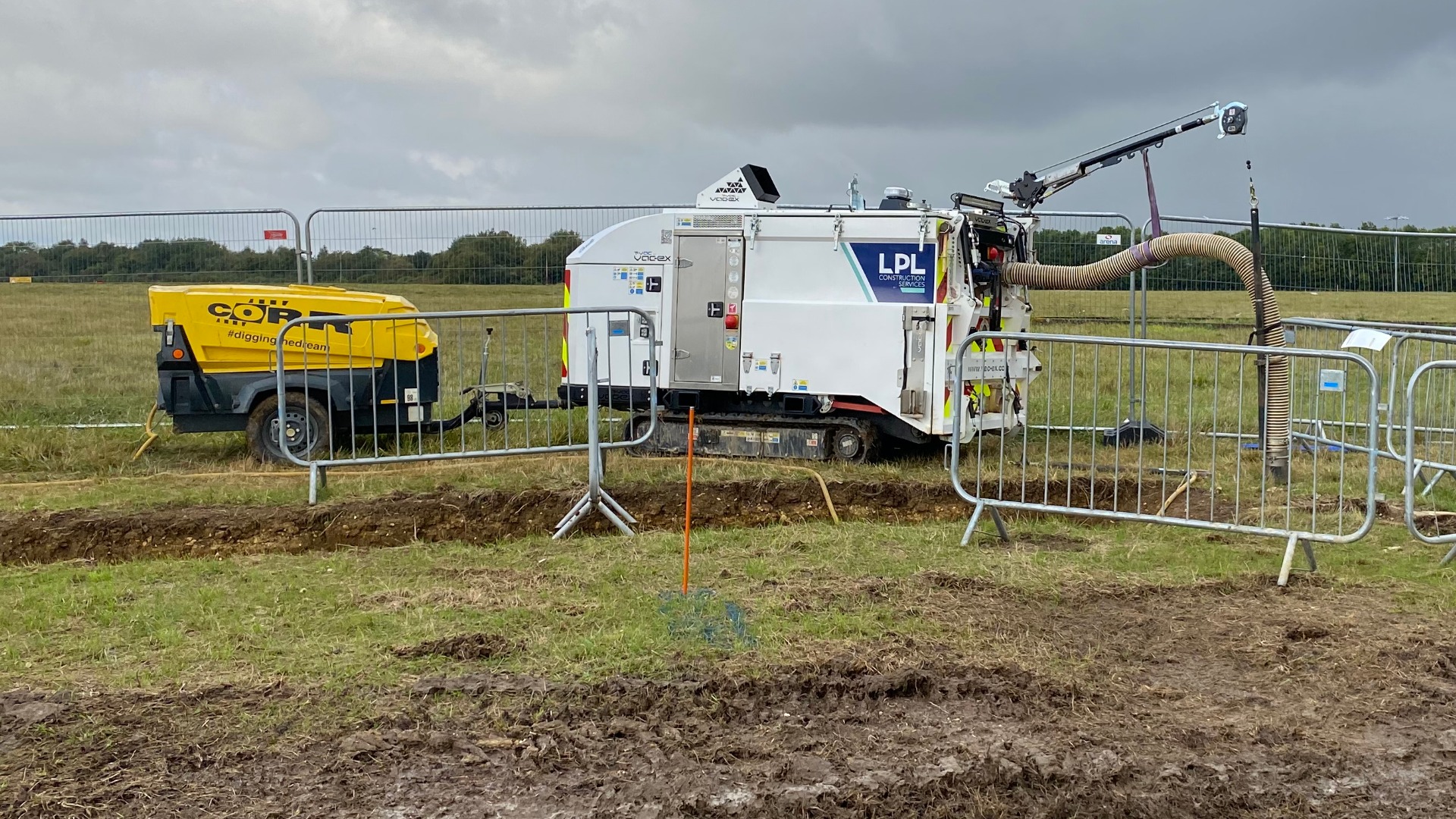
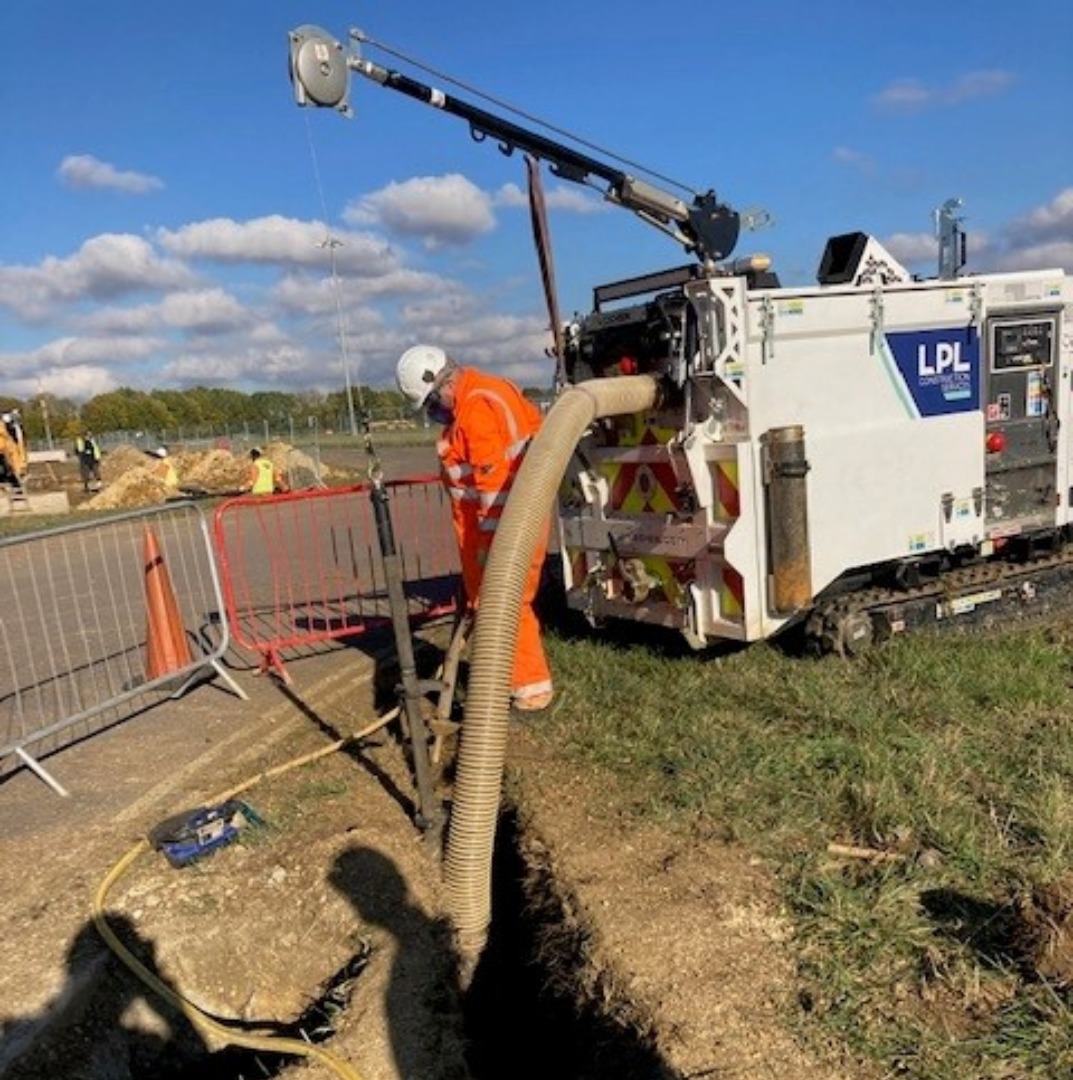
The T-VAC 2 is a compact, tracked vacuum excavator built by Vac-Ex Ltd in Doncaster. Instead of a bucket or a spade, it uses compressed air to loosen the ground and a powerful vacuum to lift the soil away. The ground is broken up by an air lance, and the vacuum removes the spoil as it goes, so the material around a buried pipe or cable is taken away without anything hard ever touching it.
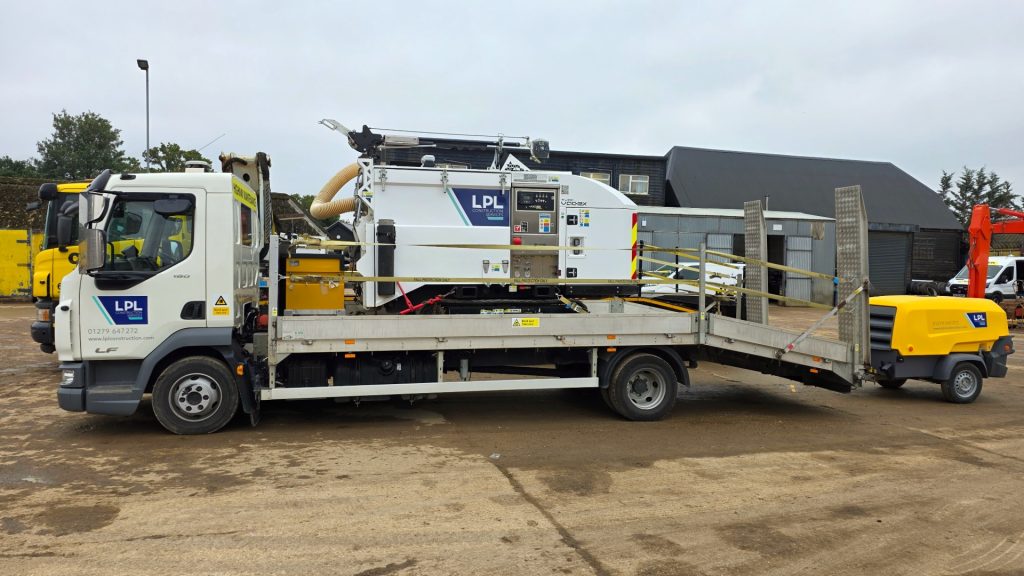
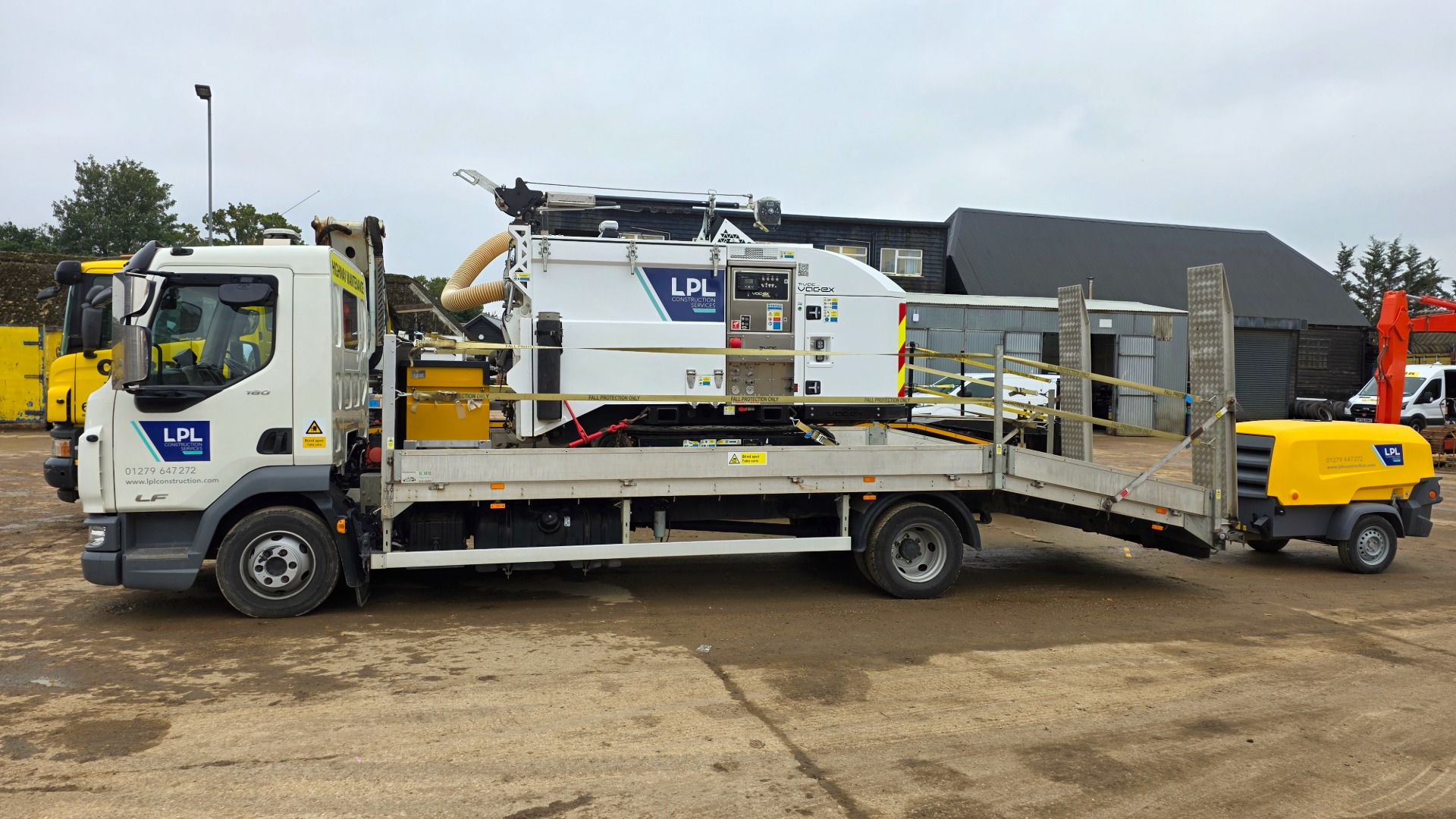
It runs on a remote-controlled, tracked platform, which means it can reach awkward spots such as narrow access routes, tight urban spaces and areas where a larger machine simply would not fit. The tracks and low overall weight spread the load across the ground, so it is far less likely to get stuck on soft ground than a 20+ tonne wheeled lorry. It is also light enough to be towed to site behind a lorry.
Why it is a game changer
Digging near live services has always been a balancing act. Underground services are rarely as simple or as well mapped as the drawings suggest, and on a live site the stakes are high. A strike on an electrical cable, particularly a high voltage one, can cause serious injury, and damage to a gas or fuel line puts everyone nearby at risk. Cut a fibre or telecoms cable and whole buildings or networks can lose service, while a burst water main or sewer can flood a trench, bring the sides down and leave a long and costly reinstatement behind. Even a minor strike means delays, repair bills and disruption for the client, and for operators running a hospital, retail park or airport, that is simply not acceptable. Protecting the security and continuity of live services sits at the heart of how we plan every excavation.
The T-VAC 2 takes much of that risk out of the final, most sensitive stage of the dig. Air loosens the soil, the vacuum lifts it, and nothing with a hard edge is swung or driven into the ground beside a live cable or pipe.
It also helps in other ways:
- Safer for the operative. The machine is remote-controlled, so the person running it can stand back, with a clearer view of the excavation.
- Less physical strain. Hand digging is hard, repetitive work. Vac-Ex reports customer feedback that its machines are around four times faster than hand digging, with a big reduction in musculoskeletal strain.
- A smaller, cleaner dig. The excavation can be kept tight and neat, with less disturbance to the ground, surfaces and surrounding services.
- Gentler around trees. Air excavation can expose roots without cutting through them.
How we use it on our projects
The T-VAC 2 gives us a safer way to expose services wherever we are working close to them. Typical uses include:
- Proving services before groundworks begin, by digging trial holes and confirming what is actually there
- Exposing buried pipes and cables ahead of new connections, diversions or tie-ins
- Working in tight spaces such as service corridors, footpaths and areas around existing buildings
- Excavating close to existing structures, where a conventional machine would risk damaging foundations or surfaces
On live sites such as airports, hospitals and retail developments, where services are dense and disruption is not an option, it is particularly valuable, and it fits neatly with the way we already manage the complexities of working in a live airport environment. The work is typically carried out by two operatives, one on the lance and one on the dig hose, working together to expose what is below. [Optional: add one line on a recent project where it has been used.]
Where vacuum excavation fits alongside traditional methods
Traditional methods have served the industry well for decades, and they remain part of safe digging. Cable avoidance tools and signal generators help to locate services, and hand digging with insulated tools is the accepted way to expose them. Each has its natural limits, though. Detection tools can struggle with services that are short, inactive or insulated. Hand digging is slow, physically demanding and, however careful the operative, a spade can still damage a cable or pipe. Mechanical excavators are quick, but they are too blunt to use right alongside a live service.
Vacuum excavation fills the gap between them. It is as careful as hand digging, but quicker and kinder to the person doing the work.
Working alongside our existing kit
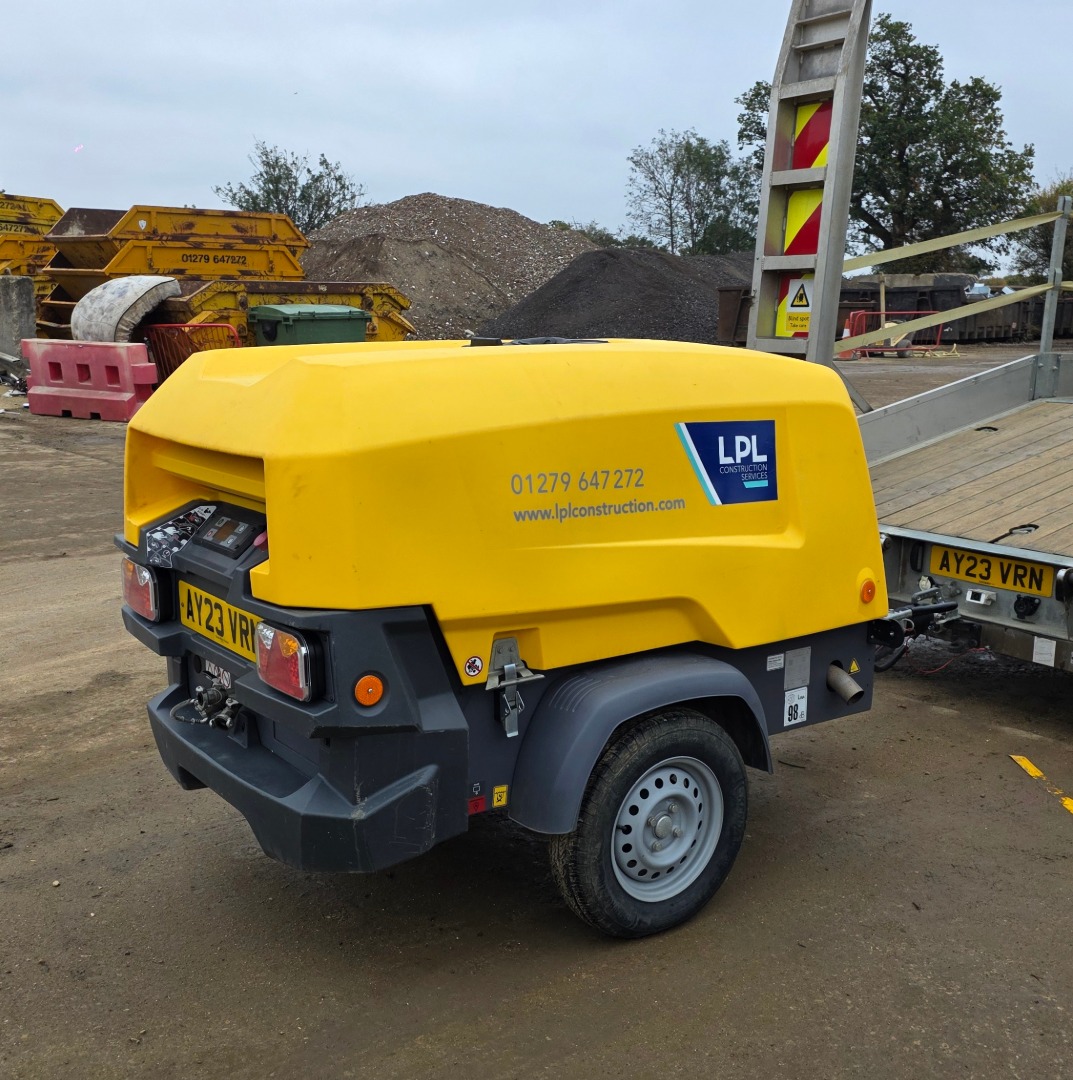
The T-VAC 2 does not replace our detection tools. It completes them. We still plan every dig using the guidance in HSE HSG 47, with CAT scanning, signal generators and our other detection equipment, and the usual permit to dig process. The T-VAC 2 is then what we use to expose and confirm what those tools have found, without putting a hard tool anywhere near it.
It is not a magic answer. It still depends on good planning, trained operators and a disciplined approach on site. What it does is take a major risk out of the final, most sensitive stage of the dig.
Safety, security and efficiency
These three things belong together, and the T-VAC 2 supports all of them.
Safety. Operatives are further from the hazard, a hard tool never goes near a live service, and the physical strain of hand digging is reduced.
Security. Protecting live services means protecting our clients’ operations. Fewer strikes mean fewer outages, fewer emergencies and fewer unplanned shutdowns.
Efficiency. Exposing services faster, with fewer repairs and delays, keeps programmes moving. The compact, towable machine can reach places that larger equipment cannot, and keep working on soft ground that would stop a heavy wheeled tanker.
Always innovating
The T-VAC 2 is one example of how we invest in new kit and technology, in the same spirit as our earlier innovation in buried services detection. We only invest where it makes our sites safer, protects our clients’ infrastructure and improves the way we work, and we will keep doing so.
Minimising risk is not just a compliance exercise. It is our standard.